15 Money Mindset Books Every Woman Should Read
Most money problems aren’t math problems. You can know exactly what a budget is and still avoid opening your banking app, undercharge for your work, or feel a low hum of guilt every time you spend on yourself.
That’s mindset — the stories about money you absorbed long before you earned any. These 15 money mindset books for women rewrite those stories, then hand you the practical tools to back the new one up.
The best money mindset books for women combine belief work with practical finance. Start with You Are a Badass at Making Money by Jen Sincero for mindset, The Psychology of Money by Morgan Housel for how money decisions really work, and Get Good with Money by Tiffany Aliche for a complete step-by-step system. Together they address both the emotional and practical sides of wealth.

Mindset first, spreadsheet second
Here’s why this list leads with belief work: research on financial behavior consistently shows that shame and avoidance — not lack of information — are the biggest blockers to healthy money habits. You can’t budget money you’re too anxious to look at.
So the list alternates deliberately: books that untangle your money story sit next to books that hand you a concrete system. Read them in pairs and each side reinforces the other — the mindset makes the system sustainable, and the system makes the mindset visible in your account balance.
1. You Are a Badass at Making Money — Jen Sincero
Sincero went from broke-in-a-garage to wealthy, and her book is a funny, kick-in-the-pants tour of every limiting belief that kept her there. If money talk usually makes you cringe, her voice makes the inner work feel like brunch with a blunt friend.
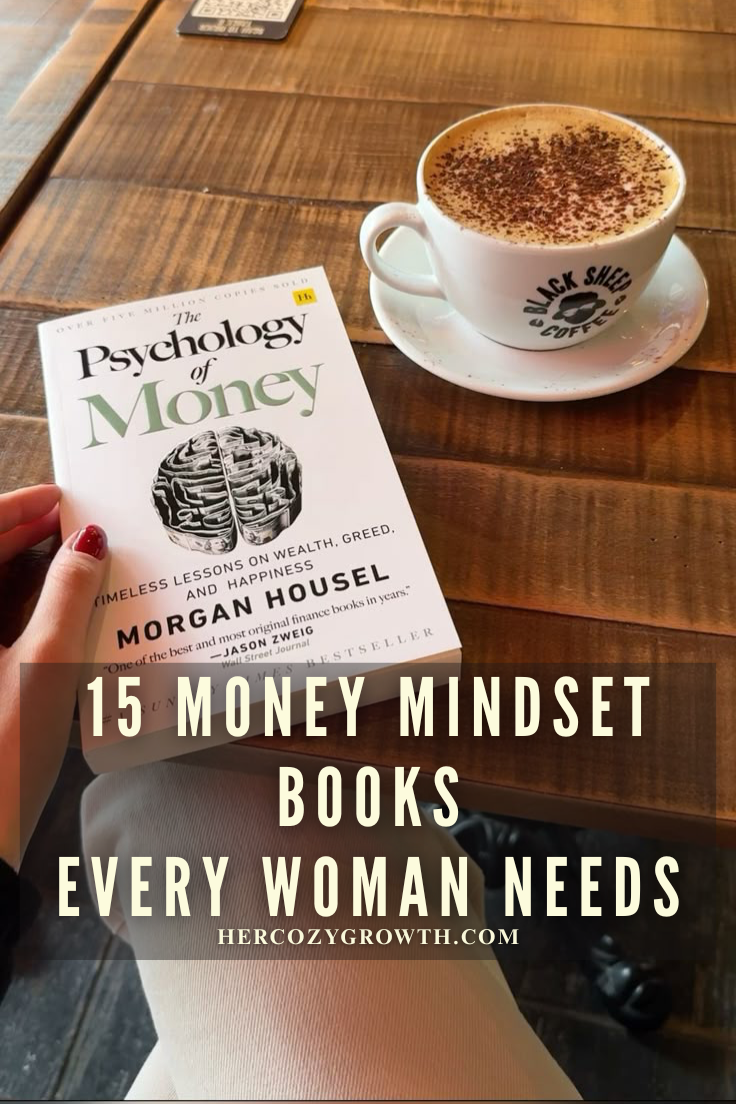
2. The Psychology of Money — Morgan Housel
Nineteen short stories about how people actually behave with money — why smart people make bad calls and modest earners quietly build wealth. The chapter on „enough” alone can change how you feel about your finances.
3. Get Good with Money — Tiffany „The Budgetnista” Aliche
The most complete system on this list: ten steps to „financial wholeness,” from budgeting and credit to insurance and estate basics. Aliche writes like a warm big sister who happens to be brilliant with money.
4. We Should All Be Millionaires — Rachel Rodgers
Rodgers argues that women earning more is a form of power, and she’s unapologetic about it. Expect million-dollar decisions, boundary-setting, and a firm push to stop shrinking your ambitions to fit your budget.
5. The Financial Feminist — Tori Dunlap
Dunlap starts with the emotions and systems behind women’s money stress, then moves into saving, debt, and investing. It reads like advice from a big sister who refuses to let you feel ashamed about where you’re starting.
6. I Will Teach You to Be Rich — Ramit Sethi
A six-week practical program: automate your finances, negotiate fees, invest simply, and then spend guilt-free on what you love. Sethi’s „rich life” concept — cut mercilessly on what you don’t care about, spend lavishly on what you do — is a mindset shift disguised as a banking setup.
7. Your Money or Your Life — Vicki Robin
The classic that reframes money as life energy: every purchase costs hours of your one life. It’s the philosophical backbone of the financial independence movement and pairs beautifully with a simpler, below-your-means lifestyle.
8. Clever Girl Finance — Bola Sokunbi
A friendly, judgment-free foundation: budgeting, saving, credit, and investing explained for real beginners. Sokunbi weaves in stories from women of many backgrounds, which makes „people like me do this” feel true.
9. Happy Money — Ken Honda
Japan’s „Zen millionaire” asks a disarming question: does your money smile? Honda’s practice of receiving and spending with gratitude — even saying „arigato” to money as it leaves — sounds odd and works strangely well on money anxiety.
10. Overcoming Underearning — Barbara Stanny (Huson)
If you chronically undercharge, over-give, or downplay your worth, this is your book. Stanny names underearning as a pattern, not a personality, and walks you through raising your „earnings thermostat” step by step.
11. The Simple Path to Wealth — JL Collins
Written as letters to the author’s daughter, this is investing stripped of jargon and fear: index funds, patience, done. For anyone who has avoided investing because it felt like a language other people speak.
12. Broke Millennial — Erin Lowry
Lowry covers the awkward, real-life money stuff other books skip: splitting bills with friends, money talks with your partner, and getting started when you’re behind. Practical, funny, and zero lectures.
13. The Soul of Money — Lynne Twist
A global fundraiser’s reflections on scarcity and sufficiency: the lie of „not enough” and the freedom of „I have what I need.” The least tactical book here, and for many readers the most healing.
14. Rich Dad Poor Dad — Robert Kiyosaki
The classic contrast between two money mindsets — assets versus liabilities, working for money versus money working for you. Read it for the paradigm shift, keep your own counsel on the specifics, and it remains a powerful first domino.
15. Die with Zero — Bill Perkins
The anti-hoarding book: money exists to fund experiences, and the goal is a rich life, not the biggest possible number at the end. A freeing final read once the saving habits from the rest of this list are in place.

- How to Build a Rich Mindset — the daily habits behind an abundant money story.
- Frugal Living Hacks — free up cash to put your new mindset into practice.
A simple 90-day reading plan
| Month | Book | One action |
|---|---|---|
| Month 1 | You Are a Badass at Making Money | Open or nickname a savings account for something you actually want |
| Month 2 | Get Good with Money | Work through the first three steps as you read |
| Month 3 | The Psychology of Money | Journal one „money story” you’re rewriting |
Ninety days won’t make you wealthy, but it will make you someone who looks at her money instead of away from it — and every financial win afterward grows from exactly that.
Frequently Asked Questions
What is the best money book for beginners?
Get Good with Money by Tiffany Aliche is the most beginner-friendly complete system, and Clever Girl Finance is the gentlest pure starting point. Pick either and simply start — the order matters less than beginning.
Can a book really change your money mindset?
Yes, when you do more than read: mindset shifts stick when they’re paired with one changed behavior, like automating savings or raising a price. The books provide the reframe; your next small action makes it real.
Why do money mindset books for women exist — isn’t money advice universal?
The math is universal; the conditioning isn’t. Many women were raised with different money messages, face pay gaps, and carry more financial guilt — books like The Financial Feminist and We Should All Be Millionaires speak to that reality directly.
How much do these books cost, and are they worth it?
Most run $10–$20 in paperback — less than a single month of most subscriptions. If one book helps you negotiate one raise or cancel one unused service, it has paid for itself many times over.
Should I read mindset books or practical finance books first?
If you avoid your bank app, start with mindset (Sincero or Honda) — knowledge you’re too anxious to use doesn’t help. If you feel ready but directionless, start practical (Aliche or Sethi).
Do these books give investment advice I should follow exactly?
Treat them as education, not personal advice — your situation, country, and tax rules are your own. Use the books to get fluent, then verify specifics with current sources or a qualified professional before big decisions.
A wealthy last word
Your money story was written before you had a say in it — but every story can be revised. Choose one book from this list, one small money action this week, and let the compound interest of tiny changes do what it always does: quietly grow into something substantial.


You May Also Like

15 Cozy Books That Feel Like a Warm Hug

The Best Morning Routine for Women: How to Start Your Day Soft, Calm and Productive